ByJohn A
How Technology Is Enhancing Smart Learning Experiences
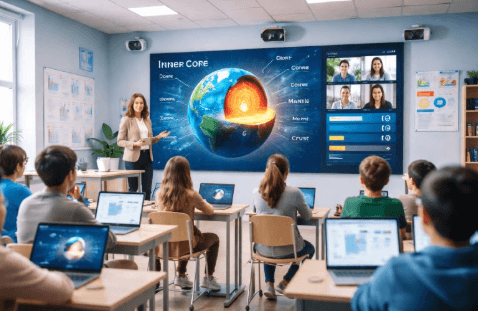
Technology is elevating smart learning by tailoring content, pacing, and feedback to individual learners. Data-driven insights inform task sequencing and resource recommendations, while adaptive systems adjust in real time to student progress. Educators curate scalable materials to maintain equity and transparency. Immersive tools support concept mastery, and iterative feedback with analytics tracks progress toward clear goals. These elements create measurable improvement, but questions remain about implementation, scalability, and long-term outcomes. How these factors integrate warrants careful consideration.
How Technology Personalizes Smart Learning Experiences
Technology personalizes smart learning experiences by leveraging data-driven insights to tailor content, pace, and feedback to individual learners. Data personalization enables targeted task sequences and resource recommendations, aligning challenges with current capability. Learner pacing ensures goals remain attainable without overload, sustaining motivation. In practice, models compare performance across tasks, adjust difficulty, and schedule reviews, supporting autonomy while preserving instructional structure and measurable progress.
What Enables Adaptive Learning in the Classroom
The framework hinges on adaptive data, which informs real-time adjustments to tasks, feedback, and pacing. Teachers curate scalable resources, ensuring personalized pacing while maintaining equity, transparency, and measurable progress toward mastery without overloading learners or curbing curiosity.
How Immersive Tools Drive Concept Mastery
Immersive tools, such as simulations, virtual labs, and interactive 3D environments, accelerate concept mastery by providing experiential, hands-on encounters with complex ideas.
Immersive simulations support sustained engagement, enabling learners to test hypotheses and observe consequences in safe, scalable settings.
Concept reinforcement occurs through iterative experimentation, feedback loops, and progressive difficulty, aligning with practical goals and a freedom-oriented pursuit of deeper understanding.
Measuring Impact: Feedback, Analytics, and Improvement
From the momentum of immersive tools in concept mastery, the next focus centers on measuring impact through structured feedback, robust analytics, and iterative improvement.
Evaluations emphasize data quality and actionable insights, enabling objective progress tracking.
Transparent reporting supports consensus building among learners and instructors, guiding targeted refinements.
The approach values pragmatic metrics, timely adjustments, and scalable practices that sustain meaningful, freedom-friendly learning enhancement.
See also: How Technology Is Enhancing Smart Learning Platforms
Frequently Asked Questions
How Do Students Stay Motivated With Ai-Driven Learning Paths?
AI-driven paths sustain motivation by offering transparent progress metrics and intrinsic goal alignment; adaptive pacing adjusts challenges to individual pace, preventing overwhelm and disengagement. AI motivation emerges when feedback feels meaningful, while adaptive pacing balances autonomy with structured support.
What Are Privacy Safeguards for Student Data in Smart Learning?
Privacy policies define scope and handling, while data anonymization reduces identifiable traces. Data governance sets responsibilities, and consent management ensures user control, enabling safe, transparent use of smart-learning data without compromising autonomy or freedom.
Can Tech Tools Replace Teacher Mentorship in Learning?
Tech mentorship vs. automation presents insufficient replacement for teacher guidance; automation cannot replicate nuanced feedback. Yet, tech tools complement learning through human centered AI safety, enabling autonomous exploration while preserving mentor roles for context, motivation, reflection, and ethical responsibility.
How Accessible Are Immersive Technologies for All Learners?
Immersive technologies are increasingly accessible but uneven; universal design principles and device affordability remain critical. Availability depends on infrastructure, funding, and adaptable content, enabling broad participation while preserving choice and freedom for diverse learners.
What Are Cost Considerations for Schools Adopting These Tools?
Cost considerations include diverse cost models and implementation timelines, which shape budgeting and scheduling; they function like a compass in uncertain markets, guiding districts toward scalable equipment, training, and support that align with long-term educational ROI and freedom to innovate.
Conclusion
Technology empowers learning as a precise, responsive system. By personalizing content, pacing, and feedback, adaptive models align tasks with individual capability, while teachers curate scalable resources to uphold equity. Immersive tools accelerate mastery, and structured analytics translate progress into actionable improvements. The result is a transparent feedback loop that continually refines instruction. In this evolving classroom, data becomes a compass, guiding every learner toward clarity and measurable achievement.